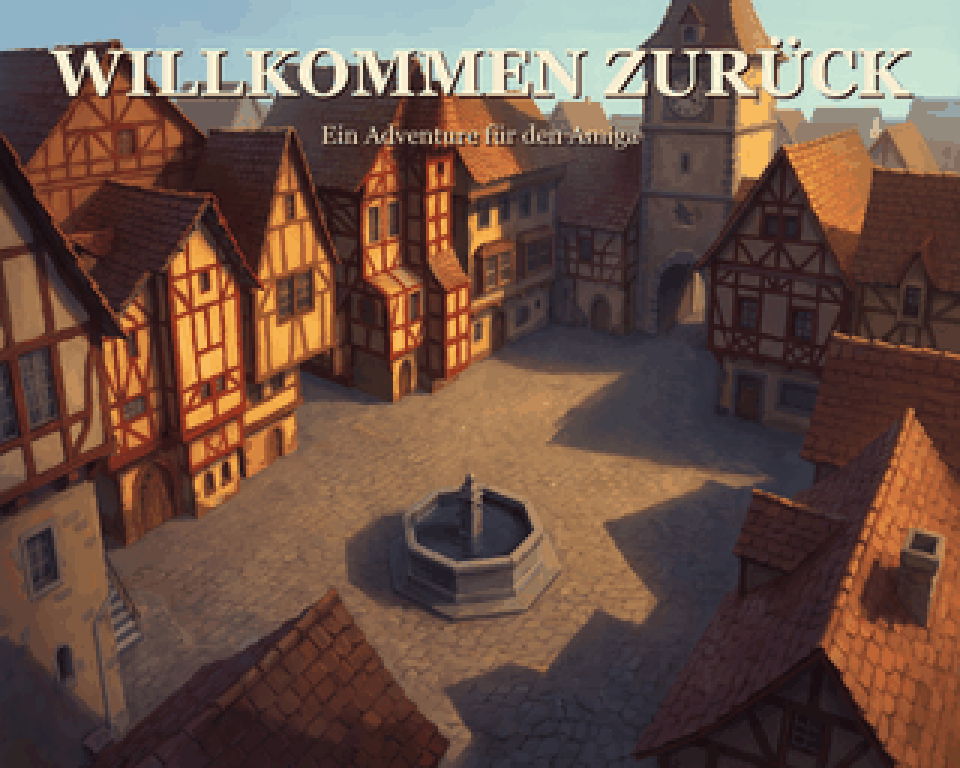
An engine of its own for the Amiga 1200 with AGA: point-and-click adventures in 256 colours, in the style of the VGA versions of Monkey Island 2 and Indiana Jones 4. The workshop runs on modern computers, the finished game on the A1200 – and already on real hardware, a Vampire V4 Standalone.
The Amiga version is in the middle of development, and there is no release date. The C64 version is much further along.
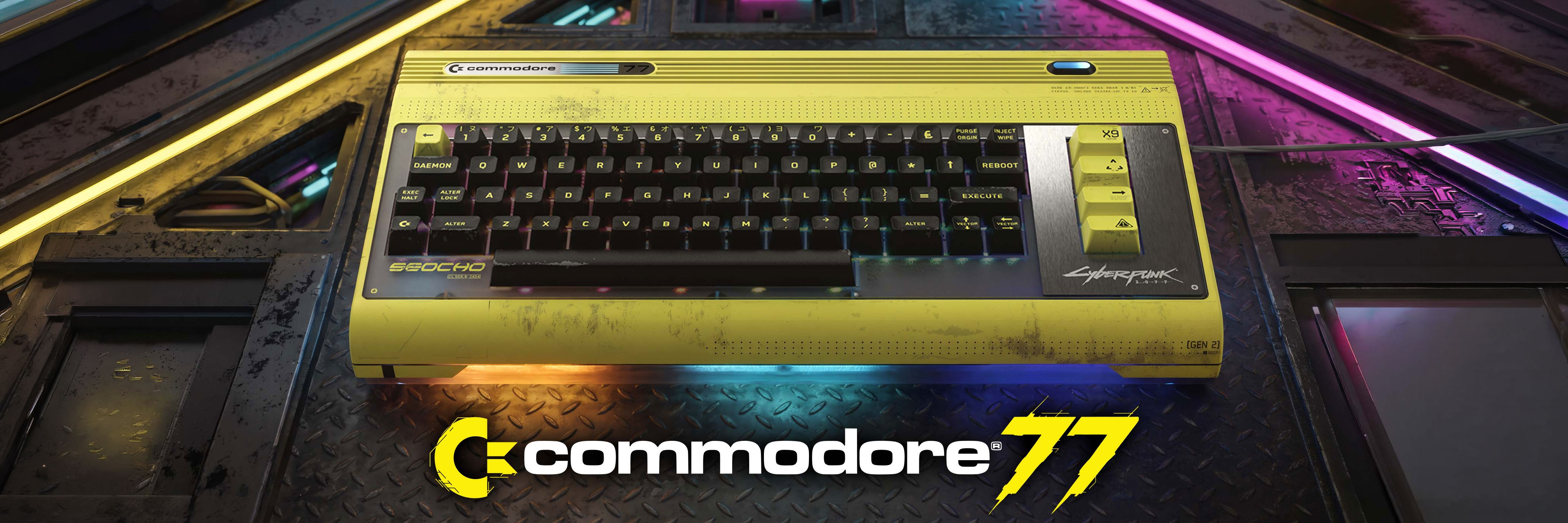
The Commodore 77 is expected to arrive in early 2027. Retro-Modern is already gathering ideas for games and software that don't just possess the larger FPGA – but visibly utilize it.
Right click, facing direction and remembered objects
The new short video shows three current building blocks of the FABULA Adventure Engine: right click as an additional control, a deliberate facing direction for the player character, and state that lets the engine remember a selected object.
Clicking the preview image loads the YouTube player in enhanced privacy mode. Data will be transferred to YouTube. Privacy Policy
FABULA now supports rooms with up to 63 character columns. The camera follows the character, while the image scrolls character by character with double buffering. The 33-second video shows the current state from the emulator.
Clicking the preview image loads the YouTube player in enhanced privacy mode. Data will be transferred to YouTube. Privacy Policy
An adventure editor on the Mac, an engine in 6502 assembler and the result on genuine Ultimate 64 hardware. FABULA remains a permanent project on this page and will be available later via itch.io.
C64
6502
Python/Qt
Ultimate 64
TC64
Clicking the preview image loads the YouTube player in enhanced privacy mode. Data will be transferred to YouTube. Privacy Policy
FABULA combines a classic point-and-click engine on the C64 with a standalone editor for modern systems. The project is under development; individual components may change before release.
01
On the Commodore 64
The Engine
Classic point-and-click adventure for the Commodore 64
Mouse (1351) or joystick, switchable in-game
Up to nine verbs, freely named, with command line and inventory
Inventory for twelve items, six per page, paged with arrows on the dividing line
Carried items with scripts of their own: talk to them, combine them, start with them
Flags and eight counters from 0 to 255
Colored rooms with custom looks
Custom base colors per room
Two character sets per room: 256 characters for each half of the screen
Scrolling rooms wider than one screen width
Animated characters, 42 or 63 pixels tall, with custom pathfinding and a side standing image
Characters walk sideways, towards the viewer and away – and turn to things
The last thing you touched stays picked and shows in the sentence line
Right mouse button carries out a selectable verb, “Look at” by default
Up to four NPCs per room, in any number of rooms, character switching via script
Several player characters with their own bags, switched with W or by script, W can be turned off
Animations as image sequences or scrolling surfaces for rain and water
Conversations with selectable sentences, depending on knowledge level
Whoever speaks moves their mouth – player character, NPCs and narration in colours of their own
Title screen with its own script, cutscenes with camera pans, skippable with RUN/STOP, and credits
Custom SID soundtrack, sound effects and footsteps matching the floor
Samples from the cartridge: a blow, a scream, thunder
One click advances the text
Save and load directly in the module, four slots, F5/F7
EasyFlash module as .crt
Runs on genuine hardware (EasyFlash, Kung Fu Flash, Ultimate 64) and in VICE; the Turbo Chameleon 64 is planned as an additional target path and still requires practical verification
10
On modern systems
The Editor
For Linux, macOS and Windows, native on Steam Deck
Unpack and start – no Java, no external assembler, no post-installation
Paint rooms with live C64 color rule checking
Set base colors per room
Image import with color moods (split-toning), palette search across all 16 colors and a character count per half of the room
Take over Koala files from C64 paint programs
Import characters from a picture, with a colour suggestion
Paint characters: walking, standing and action frames, steps from front and back, mirroring and a running preview
Objects via mouse: hotspot, walk point, name, look text, door destination and “pickable”
Click scripts instead of typing: tree editor with If/Then, flags from selection lists
Conversations with up to six sentences, each with a condition and "only once"
Paint images for title, end and cutscenes
Built-in SID tracker: three voices, instruments, filters and note entry via keyboard
Preview on genuine SID
Pre-build check with 107 rules
Puzzle chain solvability check
Ctrl+B build, Ctrl+R in VICE, directly to the Ultimate 64
Export finished .crt
Tools for remote control and photographing the running game
Undo and Redo
Open project file for inspection
Interface in German or English
SENDESCHLUSS as a finished example game with complete project file, plus the example projects Proberaum, Meteor and Promenade
FIn Development
For Adventure Creators
FABULA Engine
Engine and editor are planned for itch.io in late autumn, likely for around €25. The SENDESCHLUSS .fab project file is included as a complete example project for the editor.
itch.io link to follow
SFree
The Game for the Engine
SENDESCHLUSS
Regional radio, the night leading into 1 November 1986: you are hosting the night shift, alone in the station. The adventure built with FABULA is out now, free – playable on a real C64, an Ultimate 64 or an emulator.
The trailer shows the night shift at a regional radio station and the finished adventure running on the Commodore 64. SENDESCHLUSS was built with FABULA and is available as a free EasyFlash cartridge.
Clicking the preview image loads the YouTube player in enhanced privacy mode. Data will be transferred to YouTube. Privacy Policy
Skipping scenes, and the space bar finally does something
RUN/STOP skips a cutscene. Skipped does not mean cancelled: everything in it still happens, only without the waiting. And the space bar now really does clear the title picture — it was meant to since 30 August and in fact did nothing, because the engine was reading the wrong key.
Saved games from earlier releases are refused. A saved game now carries more; an old one would have been read wrongly — quietly, without a crash. Better a clear refusal.
A new engine, and nothing to see
The capitals Ä, Ö and Ü now sit on the same baseline as every other capital letter. None of them occurs in SENDESCHLUSS — so you will not notice a thing. The cartridge is new all the same, so that game and engine are on the same footing.
Aligned text, a new inventory
The sentence line and everything the character says now line up with the verbs below — they used to be indented by one character. The inventory sits in three columns under the verbs, six things are visible at once, and the whole column is clickable, not just the name. That is why the key ring is now simply the key: a name may be twelve characters at most.
The note in your pocket
The note can now be read properly from your pocket too: looking at it again later plays the same scene as in the control room.
You can see what the right button does
After a right click, “Look at” lights up yellow in the bar while the character walks over and the answer is shown.
Right click, and the picked thing shows
The right mouse button looks at a thing at once, without picking “Look at” first. And the last thing you touched now stands in the sentence line as long as the pointer is not on anything else — so you can see what the next verb will act on.
A calmer start
After the title picture the control bar no longer flashes over it for a moment, and “Walk to” no longer stands above the intro before its first sentence appears.
The character turns to things
The character now turns to what they are dealing with: at the wall clock you see their back, at the mug on the table their side — as in the classics.
And the last thing you touched stays picked: look at the mug, then click “Take”, and it goes into your pocket without clicking it again. A click on the floor forgets it.
Clearer where it used to mislead
A verb you click now appears in the sentence line at once, even while an answer is still standing — it used to stay invisible for a few seconds. In the cellar the crates are in front of the character again. And in three places the game says more clearly what to do next: two answers promised actions that do not exist, a third contradicted the task you had just been given, and a fourth sent you off to a step that was not possible yet.
Plus a reversal on “Use”: the “with” only appears again once the pointer is over a second thing. In exchange, a thing you can use on its own now reacts on the very first click — before, the game always waited for a second one.
Two bugs from the forum
The sentence line stayed blank after loading a saved game. And with “Use”, the “with” now appears as soon as the first object is picked — before that you could not tell the game was still waiting for something.
First release
SENDESCHLUSS arrives as a free EasyFlash cartridge for the C64.
Saved games live inside the cartridge itself — replacing the file means starting with empty save slots.
Workshop log / FABULA
From the workshop.
LOG.
C64Engine
No more bright tone after a step
After every footstep a small bright tone rang on. A sound borrows a voice from the music and gives it back afterwards. But the step ended after 80 milliseconds, in the middle of its envelope, and the rest kept sounding with the music's release: a good 300 milliseconds long, at the pitch the music had last used on that voice. A recording of the SID registers in the emulator found it. The same recording also disproved the first guess, that the note was being struck again.
Now the sound hands the voice back without a release, and the music's next note sets its own. The tone is gone within a few milliseconds. The obvious fix, simply muting the voice, would have cut off held notes. This applies to every sound, but you heard it mostly on the footsteps.
C64Engine
Twelve things in the bag
The character now carries up to twelve things instead of eight, and six are visible per page. You page with arrows at the ends of the dividing line: right for the second page, left to go back. The arrows only appear when there are more than six things. A version with three rows and no dividing line, nine things at once, had already been built and tested in the emulator. It was dropped, because the bag and the verbs should be kept apart by a border.
The room for it came from the tightest part of the program: the names and look texts of carried things now live elsewhere, which frees around 800 bytes there. The save game has a new version as a result. The engine rejects older ones instead of reading them wrongly.
C64Engine
Towards the viewer and away
A wish from the forum: characters should be able to walk into the depth of the picture too, because otherwise a long corridor leading into the screen is off limits. Until now front and back were standing images only, and every character turned sideways before its first step. Now a player character walks towards the viewer and away. It needs its standing images from the front and back, plus one or two step frames per view. The walk goes standing image, step 1, standing image, step 2.
The character turns to the front or back as soon as it is only moving vertically and has at least ten pixels left to go. Otherwise the short end of a diagonal path would turn it towards the viewer before every single thing. At the destination it stays that way. Without step frames nothing changes, and supporting characters walked by a script still move sideways. Found along the way: when the player character was switched, the copy of its sprites wrote past its space. Whatever lay there, a side standing image for instance, was overwritten. That is fixed too.
C64Workshop
Front and back in the character window
Below the frame buttons there is now a second row: frames 8 and 9 are steps from the front, 10 and 11 from the back. Step 1 from the front and from the back is enough, and step 2 makes the walk smoother. The preview runs from the chosen view, the onion skin puts the matching standing image underneath, and a red line tells you when painted steps do not count. Next to it is a new Mirror button that flips the chosen frame left to right, because step 2 from the front is usually step 1 mirrored.
A supporting character that only stands now gets its front and back views as well. The two buttons used to be greyed out for it, although the engine and the check both know those views. The room view now shows such a character that way too, instead of from the side. And the workshop's windows open where they were last, at the size you dragged them to, even after a restart.
AmigaEngine
Music from fast RAM, without dropouts
During playtesting on the Vampire V4SA, the music in the intro broke off with every picture and then took seconds to come back. The cause was the loading pause. While data is being read, the engine hands the hardware back to the operating system, and in doing so it also switched off Paula's sound channels. They only came back on with the next note. With a recording played in sections of 7.68 seconds, that can take up to eight seconds. Now the sound channels keep running through every pause.
That raised a second question: why keep everything in chip RAM? Until now the whole piece of music sat there, 723 KB for 69 seconds. A recording in sections does not need that. It now lives entirely in fast RAM, and chip RAM holds just two buffers of 80 KB each. Paula plays one while the other is already queued and gets picked up seamlessly on the next pass. The engine then fills the freed buffer with the next section. The music plays centred on two channels, which leaves two free for sound effects. Such a piece is recognised from the module itself, so the workshop needs no switch for it. One last stutter during cutscenes came from the master switch for all DMA channels, which the pause briefly turned off as well. It now stays on.
AmigaWorkshop
A line stays as long as it takes to read
On the V4SA the texts ran by too fast. Measured in the script, almost every line was followed by a pause of just over a second. The engine would have kept the line up longer, but by then the next one had already arrived. That is not a mistake in one script. It is simply the easiest way to write one, and it would happen again in every game.
So the rule FABULA found on the C64 now applies here too: at most eight seconds for a full line of 76 characters, shorter lines in proportion, and never less than 1.8 seconds. The build lengthens a pause that is too short after a line on its own, and the engine keeps the text on screen just as long. Because the workshop goes through the same build, this holds for every game without anyone touching a number. A click still cuts any pause short.
Preview images are hosted locally on Retro-Modern. Only when you click a video is the YouTube player loaded in enhanced privacy mode and data transferred to YouTube. Privacy Policy
FABULA / C64 / Ultimate 64
Zak's Bedroom — Tech Test
An internal feasibility test showing the editor, animations and the result on the Ultimate 64 – not a download project.
C64 / SID / AI
ZWEIKLANG — two genuine SIDs
8580 and 6581, Claude AI and Ultimate 64 E2 in a C64 demo.
C64 / Assembler
LISSAJOUS — 6502 on genuine hardware
Mathematics, raster effects and demoscene atmosphere directly on the C64.
C64 / NES / Amiga
PIXEL LEGENDS — three worlds
Retro legends on genuine Apollo-V4SA and 68080 hardware.
AI / Amiga / 68080
AI meets 68080 — FRED-80
What happens when modern AI meets genuine Amiga hardware?
Channel Teaser
Retro-Modern in 23 seconds
A brief look at the world between yesterday and tomorrow.
Old systems are not just demonstrated here. They are given new tasks, new tools and sometimes quite unusual partners.
01
Genuine Hardware
C64, Ultimate 64, Turbo Chameleon 64, Amiga and Apollo 68080 – whenever possible, the result runs on the actual device.
10
Home-built
Assembler, small tools, custom demos and experiments instead of mere nostalgia.
11
Modern Tools
AI, Python and today's development environments help bring new ideas to old machines.
About Retro-Modern
Between the breadbox and the future.
Retro-Modern is a hobby channel for everyone who loves technology. It's about Commodore, Amiga and C64 – but just as much about modern games, gadgets, AI and the question of what happens when you combine both.
Whether you're a retro fan, a curious gamer or a tech nerd: the channel tells stories, shows projects and tries things out. No high-gloss lab. Instead, genuine hardware, personal curiosity and the joy of building.