Announced Peak
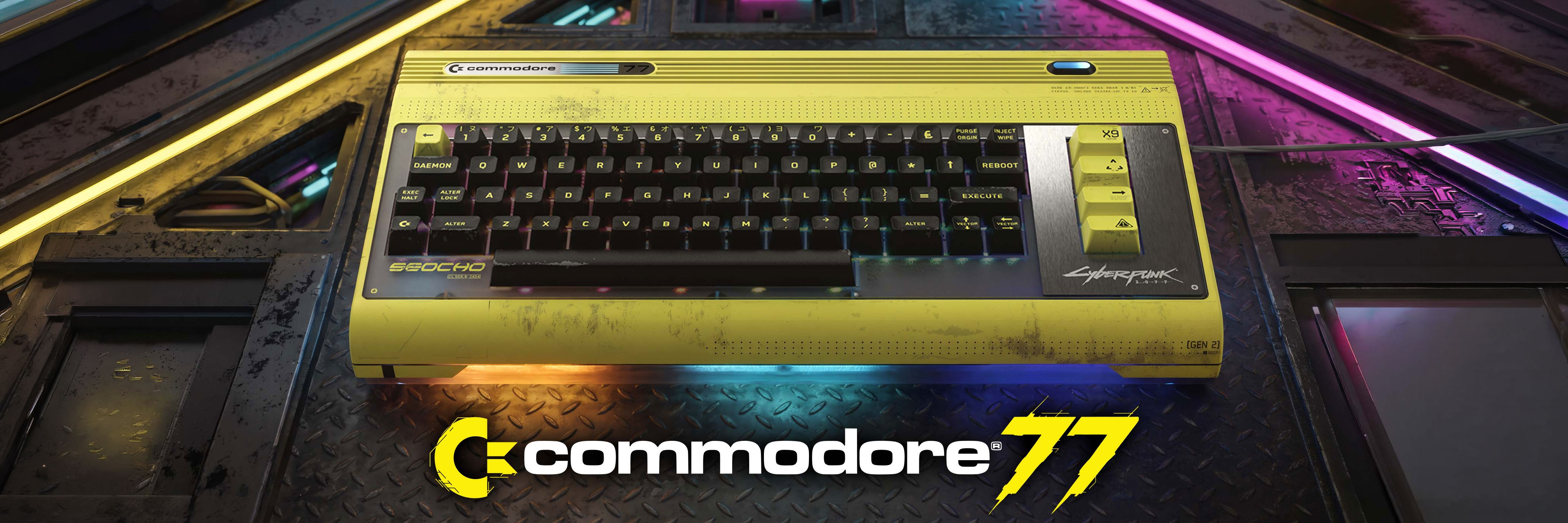
Commodore suggests a speed of up to 77 MHz. At the same time, high C64 compatibility remains a stated goal.

C77 // FUTURE LAB // 2027
The Commodore 77 is more than just a striking special edition. The larger FPGA and the announced speed raise an intriguing question: What would software have to look like to not only support this machine, but visibly push it to its limits?
Official product image: © 2026 Commodore International Corporation / CD PROJEKT RED
Verified / As of 2026-08-27
Commodore describes the C77 as the first special edition of the Commodore 64 Ultimate, developed with CD PROJEKT RED. The following details are from the official announcement – not from wishlists or forums.
Commodore suggests a speed of up to 77 MHz. At the same time, high C64 compatibility remains a stated goal.
The C77 uses an AMD Artix XC7A100T. According to Commodore, the regular Commodore 64 Ultimate uses the smaller 50T.
Compatibility with more than 10,000 existing C64 games and old as well as new peripherals has been announced.
The start of delivery is announced for early 2027. Pre-order price: 377 US Dollars.
Interface / visibly adapted
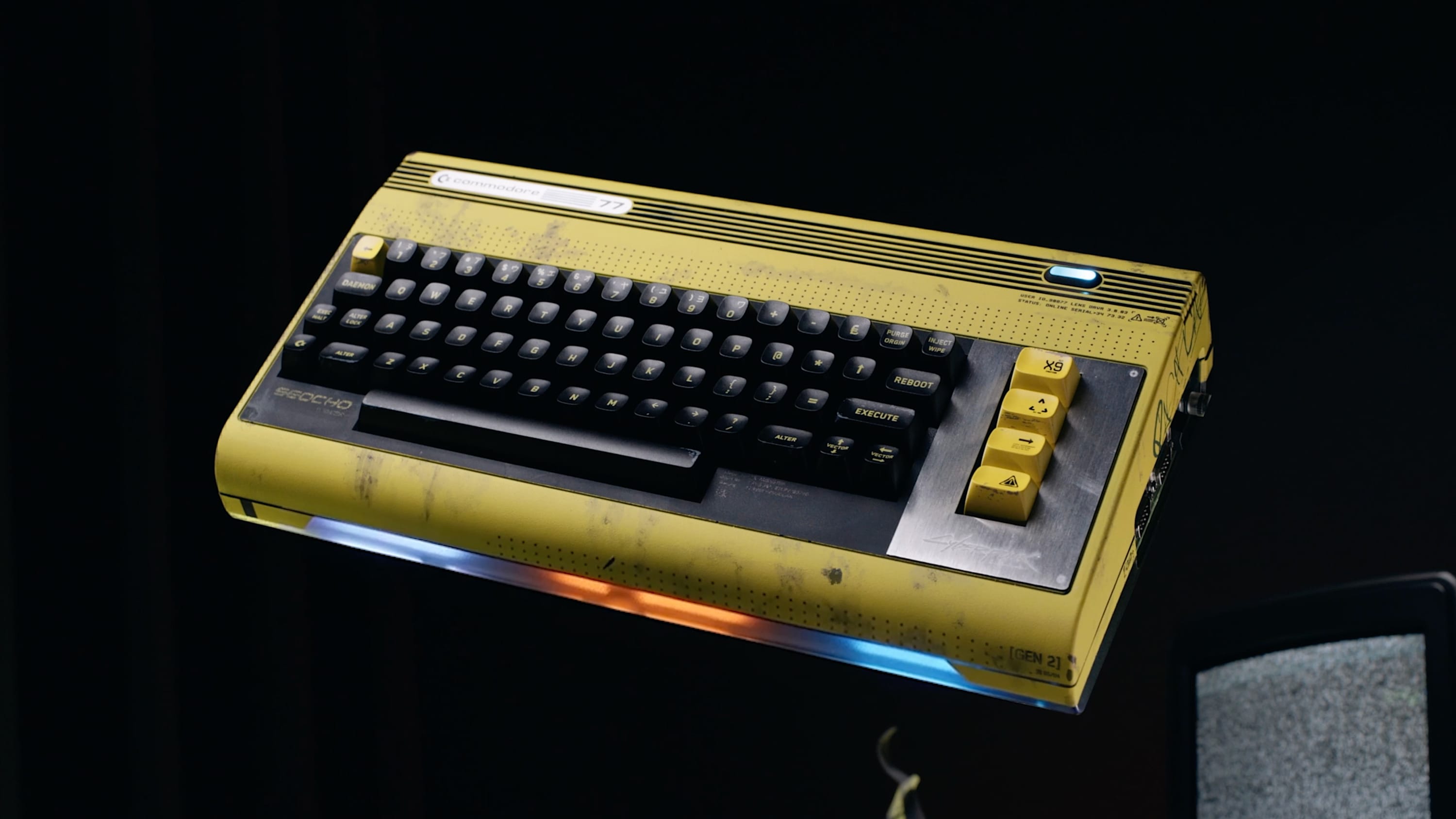
The basic layout is reminiscent of the C64, but the labeling is consistently translated into the world of Night City. Official images show labels such as DAEMON, PURGE ORIGIN, INJECT/WIPE, REBOOT, EXECUTE, and ALTER.
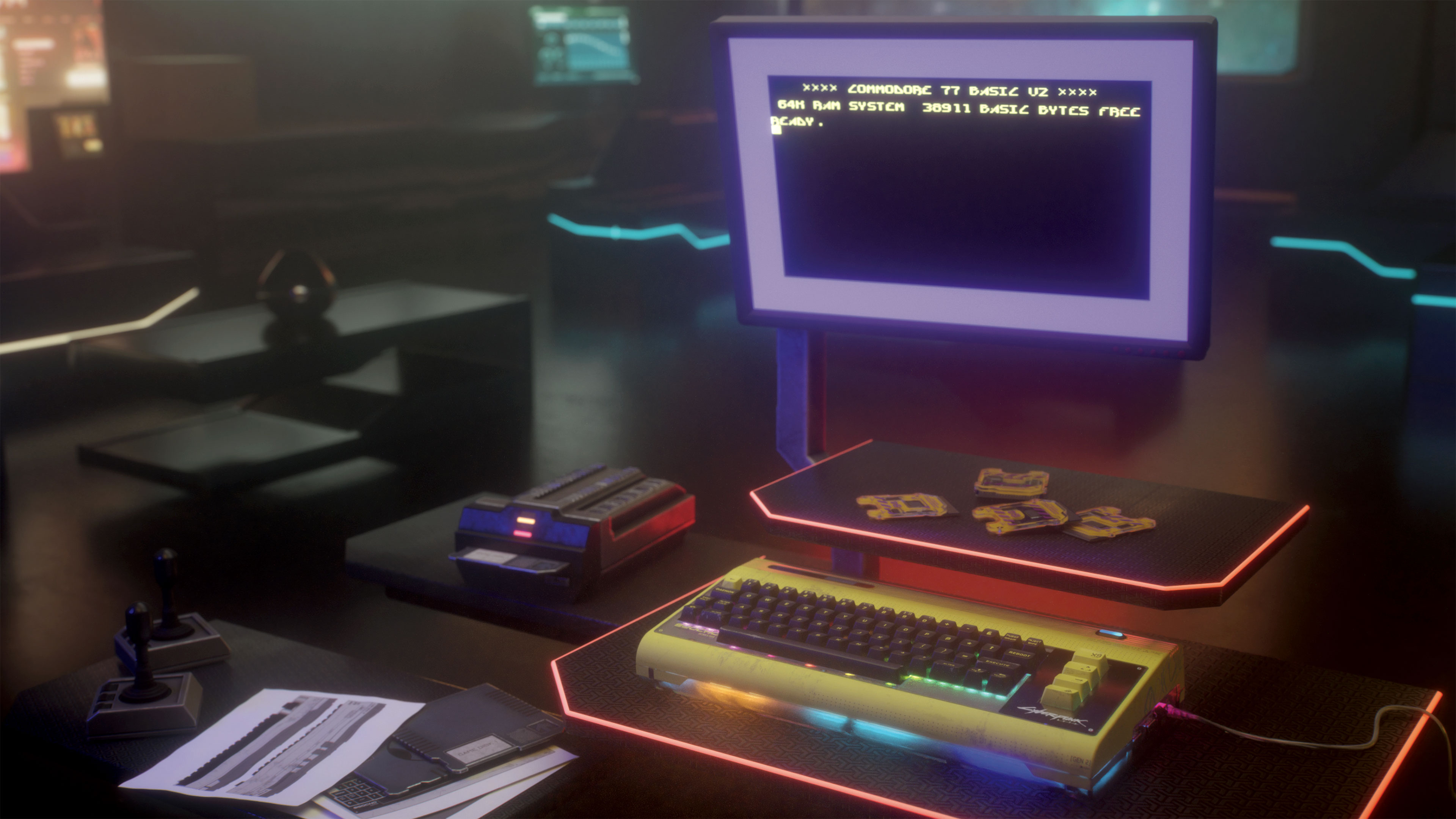
To the right is a brushed metal surface with four large yellow buttons. Added to this are the artificially aged case, a turquoise glowing status indicator, and colored LEDs in the transparent base. This feels less like a museum piece – and more like a terminal demanding its own software.
Test Bench 01 / own development
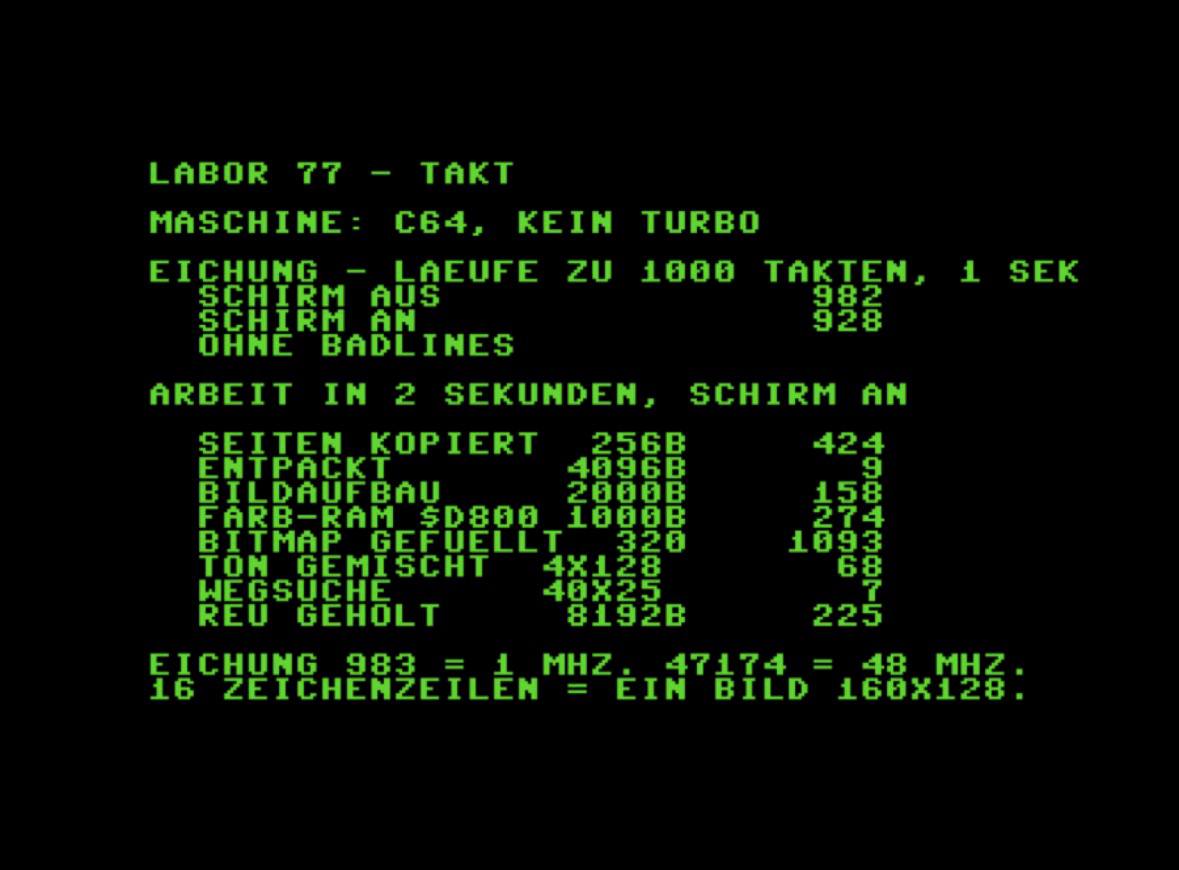
INPUT: C64 // TURBO: OFF // BASELINE: LOCKED
The first run deliberately operates in C64 mode without turbo. After calibration, the routine counts typical tasks for two seconds: copying memory pages, unpacking data, building screen and color RAM, mixing sound, searching paths, and retrieving data from the REU.
Later, the same course will run on the existing Ultimate 64, the Turbo Chameleon 64 and finally on the C77. This turns "faster" into a visible, reproducible comparison – and a game idea into a real lab project.
Test Bench 02 / SuperCPU 20 MHz
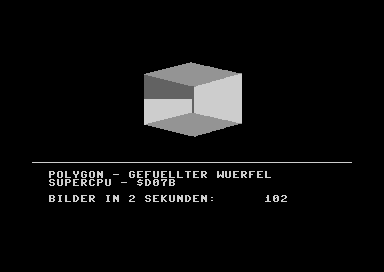
Two small routines mark the next stage between the 1 MHz baseline and the later C77: a visible geometry sample and a computer-in-computer test. No extrapolation, but real screen values from the current 20 MHz run.
POLYGON // FILLED CUBE
102 frames in 2 secondsA filled cube is not yet cyberspace – but a clean sample for screen build-up, surfaces, and reproducible render time. This is exactly what can later become a corridor of ICE structures.
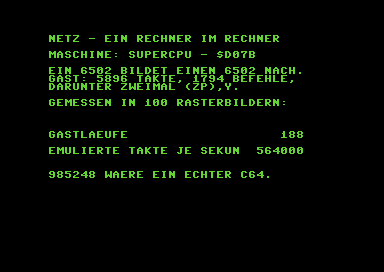
NETZ // COMPUTER IN COMPUTER
188 guest runs / 100 raster framesA 6502 emulates a 6502. The routine reports 564,000 emulated cycles per second. The displayed 985,248 cycles are its C64 reference mark – not a measured C77 value.
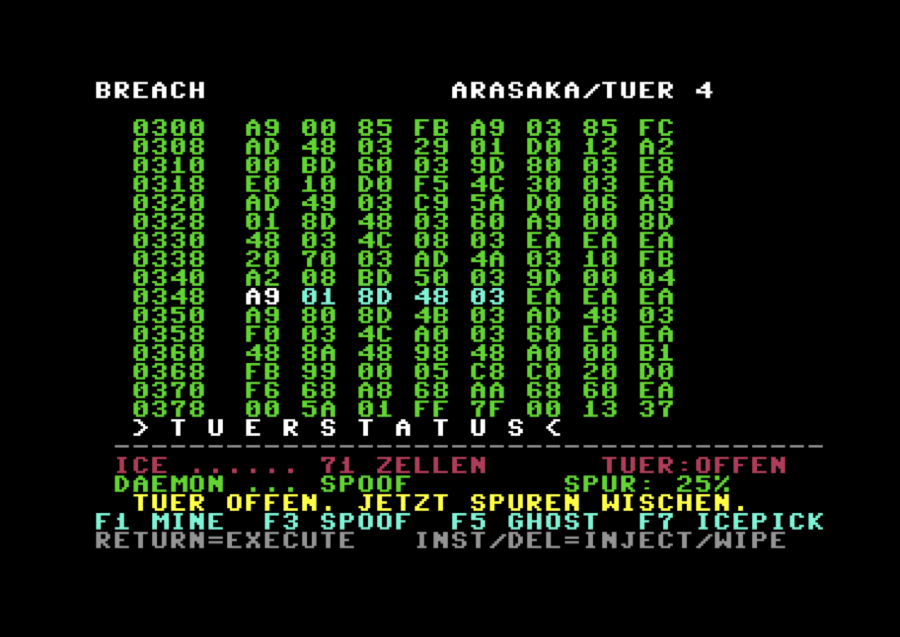
BREACH / first system contact
BREACH no longer exists only as a headline. The first system screen already translates the lab idea into a readable hacker situation.
The node ARASAKA / TÜR 4 shows hex data, ICE across 71 cells, an open door, and a trace of 22 percent. Below lie the tools: Mine, Spoof, Ghost, and Icepick – plus Execute, Inject, and Wipe.
This closes the three levels: POLYGON tests visible geometry, NETZ tests computing logic within the computer, and BREACH turns this into a game plot. The later C77 mode is not intended to replace this basis, but to visibly expand it.
Retro-Modern / possible projects
Favorite / first system screen ready
A Netrunner hacking game where computing power is not just a technical number – but your survival time. The first terminal prototype is already visible in the lab.
You jack into a foreign system. Black ICE begins the pursuit. A procedurally generated vector corridor of nodes, firewalls, and data traps grows before you. The faster you analyze, hack, and reroute, the longer the distance to the pursuer remains.
To the playable prototype and workshop status →
Compatible base mode with reduced representation – the classic C64 remains part of the design.
More geometry, greater visibility, denser ICE structures, and smoother movement.
The full showcase mode: the additional computing time becomes immediately visible on the screen.
02 / Arcade Showcase
A light-cycle and escape game over a wireframe grid. Frame rate, visibility, and complexity scale with the active clock – ideal as an instantly understandable before-and-after effect.
03 / FABULA Spin-off
FABULA's room and script logic remains, but the painted rooms give way to a vector renderer. “Take / Open / Use” becomes “Hack / Bypass / Decrypt”.
Feasibility / measure first, promise later
Ultimate 64 systems possess programmable turbo control; existing demos already show 48 MHz code. However, it is not yet documented for the C77 whether the same registers and settings remain unchanged up to 77 MHz.
Normal C64, Ultimate, and C77 paths must be clearly distinguished.
The fast mode must never be assumed; a stable 1 MHz path remains mandatory.
More CPU time does not automatically make video and bus timing arbitrarily fast.
Only real measured values will decide which of the ideas becomes a game and which remains just an experiment.
To be continued
Until hardware delivery, there is time for renderer prototypes, clock measurements on the existing Ultimate 64 and Turbo Chameleon 64, and the question of which concept truly holds up. This page will become a development log as soon as ideas turn into code.
Retro-Modern is not affiliated with Commodore International Corporation or CD PROJEKT RED. Commodore, Cyberpunk, and Cyberpunk 2077 are trademarks of their respective owners. The product images are from the official Commodore announcement and are used here for editorial reporting.